Carry-On Packing List: How to Travel Light for Any Trip
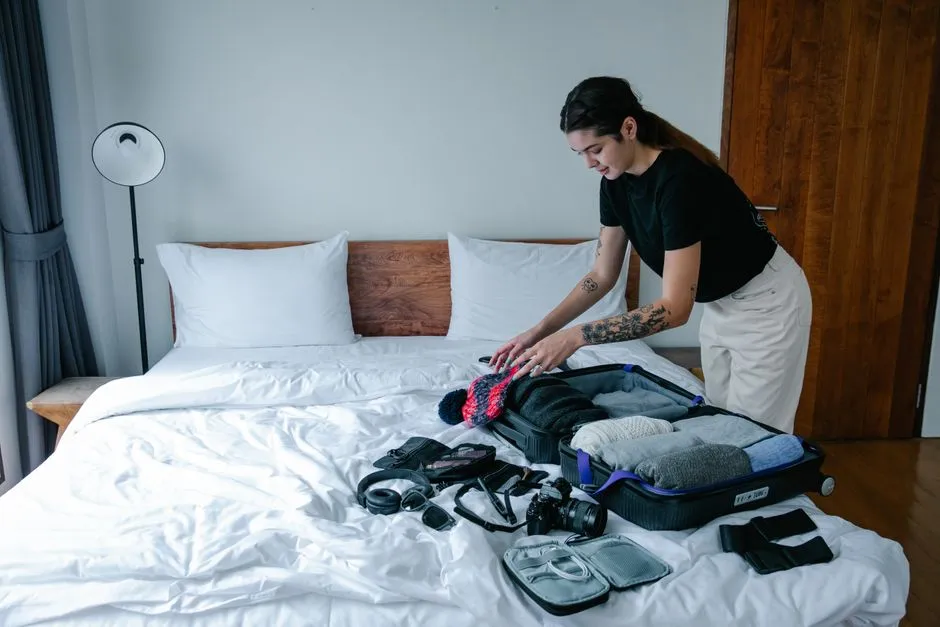
- The Carry-On Packing List That Works for Any Trip
- The Complete Carry-On Packing List
- How to Pack a Carry-On: The Method Matters as Much as the List
- One List, Any Trip Length: What Actually Changes
- Know Your Airline's Size Limits Before You Pack
- Why Carry-On Only Is Worth the Discipline
- Common Carry-On Packing Mistakes
- The Bottom Line
The Carry-On Packing List That Works for Any Trip
A carry-on packing list is a short, repeatable checklist of clothing, toiletries, electronics, and documents that fits in one cabin-sized bag — and it works because it's built around a system, not a destination. The core is simple: a capsule wardrobe of mix-and-match pieces, liquids under the airline limit, one set of electronics, and your documents where you can reach them. Pack that way once, and the same list covers a long weekend or two weeks abroad.
That last part surprises people, so it's worth saying plainly: the length of your trip barely changes what you pack. Past about five days, you're not packing more clothes — you're planning to do laundry. Once that clicks, carry-on-only stops being a challenge and becomes the default.
Here's the full list, then the reasoning behind it, so you can adapt it instead of just copying it.
The Complete Carry-On Packing List
Clothing (the capsule core)
Every piece should work with at least two others. Neutral bases, one or two accent pieces, done.
- 4–6 tops — mix of short and long sleeves, in colors that all pair with your bottoms
- 2–3 bottoms — one comfortable for travel days, one that can look put-together
- 1 dress or collared shirt — your "nicer dinner" option
- 1 light layer — cardigan, overshirt, or packable fleece
- 1 jacket — weather-appropriate; wear it on the plane instead of packing it
- 5–7 pairs of underwear and socks — this is the one category where a few extras earn their space
- 1 set of sleepwear — doubles as loungewear
- Swimsuit — only if there's a realistic chance you'll swim
- 2 pairs of shoes maximum — one comfortable walker (worn on the plane), one alternative packed
Toiletries (the liquids bag)
Most airport security programs limit carry-on liquids to containers of 100 ml (about 3.4 oz) or less, all fitting in one roughly quart-sized clear bag. Build your kit to that constraint:
- Travel-size shampoo, conditioner, and body wash — or solid bars, which don't count as liquids
- Toothbrush, small toothpaste, floss
- Deodorant
- Skincare basics in small containers — moisturizer, sunscreen, cleanser
- Minimal makeup, if you wear it
- Razor, hairbrush or comb, hair ties
- Any medications in original packaging, plus a couple of basic pain relievers and bandages
Electronics
- Phone and charger
- One universal plug adapter for international trips
- Power bank — pack it in your carry-on; airlines require spare batteries in the cabin, not checked bags
- Headphones
- Laptop or tablet only if you'll genuinely use it
- One short charging cable per device, not the drawer full
Documents and money
- Passport or government ID
- Boarding passes — digital, with a screenshot as backup in case of dead zones
- One primary credit or debit card, one backup stored separately from your wallet
- A small amount of cash
- Travel insurance details and key confirmation numbers, saved offline
- Photocopies or photos of your passport, stored separately from the original
The personal item (your under-seat bag)
Most airlines allow a smaller second bag that fits under the seat. This is your in-flight and first-day survival kit:
- Everything valuable or irreplaceable: documents, electronics, medications
- Refillable water bottle, emptied before security
- Snacks
- One change of underwear and a spare top — your buffer if anything goes sideways
- Book or downloaded entertainment
- Lip balm, hand sanitizer, tissues
How to Pack a Carry-On: The Method Matters as Much as the List
A good list packed badly still won't close. These five habits do most of the work.
Roll your clothes, or use packing cubes — ideally both
Rolling reduces wrinkles in casual fabrics and lets you see everything at a glance. Packing cubes add compression and, more importantly, organization: one cube for tops, one for bottoms, one for underwear and socks. Living out of a bag for a week is dramatically easier when nothing has to be excavated.
Wear your bulkiest items on travel day
Heaviest shoes on your feet, jacket on your body or over your arm. A jacket in your bag costs you a third of the space; a jacket on the plane costs you nothing and doubles as a blanket.
Put heavy things near the wheels
If you're using a rolling bag, shoes and toiletries go at the bottom (wheel end) so the bag doesn't tip. In a backpack, heavy items sit close to your spine, mid-back height.
Fill every void
Socks inside shoes. Belts coiled inside collars. The gaps around packing cubes are where chargers and sunglasses cases live. A well-packed carry-on has almost no air in it.
Do the final subtraction
Pack, then remove two or three items before you zip. Almost everyone's first pass includes something they "might" need. The honest test: if you'd have to invent a scenario to use it, it stays home. On the road, nearly anything forgotten can be bought; nothing over-packed can be un-carried.
One List, Any Trip Length: What Actually Changes
The clothing list above genuinely doesn't grow with the trip. What changes is your laundry plan.
| Trip length | Clothing approach | Laundry plan |
|---|---|---|
| 2–4 days | Pack exactly per the list, maybe one fewer top | None needed |
| 5–8 days | The full list as written | One sink-wash of underwear/socks mid-trip |
| 9–14 days | Same list — resist adding more | One proper laundry stop (laundromat, hotel, or rental machine) |
| 2+ weeks | Same list | Laundry roughly weekly; build it into the itinerary |
Sink-washing is the unglamorous skill that makes this work: a bit of travel detergent or even hotel shampoo, five minutes, and quick-dry fabrics are wearable by morning. It's why fabric choice matters more than quantity — merino wool and synthetic blends dry overnight; heavy cotton doesn't.
Know Your Airline's Size Limits Before You Pack
There is no single universal carry-on size. A common allowance among large US carriers is around 22 x 14 x 9 inches (about 56 x 36 x 23 cm) including wheels and handles, but international and budget airlines are frequently stricter, and some enforce weight limits as low as 7–10 kg. Two rules keep you out of trouble:
- Check the specific airline's current policy before every trip — not a blog post, the airline's own site, since allowances change.
- If you fly multiple carriers, pack to the strictest one. A bag that clears every airline on your itinerary is worth far more than a bag that's two inches roomier.
This check belongs in your trip prep alongside booking and documents — it's exactly the kind of detail a good planning routine catches early, which is why we fold it into our step-by-step trip planning framework.
Why Carry-On Only Is Worth the Discipline
If you've always checked a bag, the payoff list is longer than you'd think:
- No lost luggage, ever. Your bag goes where you go.
- Faster on both ends — no bag-drop line, no carousel wait, straight to the exit.
- Cheaper on many airlines, where checked bags carry fees and cabin bags often don't.
- Easier transit — stairs, cobblestones, trains, and bus luggage racks all stop being obstacles.
- Simpler decisions all trip long. Fewer things means less to manage, lose, or repack.
There's a safety dimension too: one manageable bag keeps a hand free and lets you move confidently through stations and streets, which matters most when you're on your own. It's one of the habits we cover in our solo female travel guide — mobility is an underrated form of security.
And practically, carry-on-only makes short trips frictionless enough that you'll take more of them. When packing takes twenty minutes and there's no checked-bag overhead, a two-night getaway stops feeling like a production — a small shift that does real work if you're trying to fit more travel into a full-time job.
Common Carry-On Packing Mistakes
- Packing outfits instead of a system. Seven distinct outfits fill a suitcase; ten interchangeable pieces make twenty outfits from half the space.
- "Just in case" items. The umbrella, the third pair of shoes, the formal option for a trip with no formal plans. Pack for the trip you booked.
- Full-size toiletries. They'll be confiscated at security or waste a third of your liquids bag. Decant or go solid.
- Ignoring the personal item. That under-seat bag is significant free capacity many travelers barely use.
- Buying gear to solve a packing problem. Compression cubes help, but no product replaces packing less. Start by subtracting.
The Bottom Line
Travel light enough, and packing stops being a chore you dread and becomes a twenty-minute routine you barely think about. Build your capsule of mix-and-match clothing, keep a pre-packed toiletry kit that never gets unpacked, hold electronics to the minimum you'll truly use, and plan laundry instead of packing for every day. Check your airline's size limits, wear the bulky stuff, and subtract before you zip.
The first carry-on-only trip takes some faith. By the second, you'll wonder what you ever put in that checked bag.